NE - Divided Supreme Court Reinstates Occupational Disease Claim for COVID-19
04/23/2024 |
0
![]() A divided Nebraska Supreme Court revived a health care worker’s occupational disease claim based on her COVID-19 infection in the early days of the pandemic.
Christine Thiele worked as a nurse liaison for Select Medical Corp., which operates a critical care recovery hospital adjacent to Bergan Mercy Hospital in Omaha.
In March 2020, at the outset of the COVID-19 pandemic, Select designated Thiele, who normally worked remotely, as an essential health care worker and required her to report to the hospital.
From March 16 to April 6, 2020, other than going to or conducting duties for work...
Read More
A divided Nebraska Supreme Court revived a health care worker’s occupational disease claim based on her COVID-19 infection in the early days of the pandemic.
Christine Thiele worked as a nurse liaison for Select Medical Corp., which operates a critical care recovery hospital adjacent to Bergan Mercy Hospital in Omaha.
In March 2020, at the outset of the COVID-19 pandemic, Select designated Thiele, who normally worked remotely, as an essential health care worker and required her to report to the hospital.
From March 16 to April 6, 2020, other than going to or conducting duties for work...
Read More
TX - High Court Orders Further Proceedings on Truck Driver's Status as 'Employee'
04/23/2024 |
0
![]() The Texas Supreme Court ruled that an injured truck driver’s claims against three related corporate entities had to be remanded for a determination of whether he qualified as their employee at the time of his wreck.
Case: JNM Express LLC v. Lozano, No. 21-0853, 04/19/2024, published.
Facts: Lauro Lozano fell asleep behind the wheel of a big rig in May 2015 while driving from Texas to Maryland. His truck collided with another rig, and Lozano suffered multiple severe injuries.
At the time of the accident, Lozano was driving a truck owned by JNM Express LLC that had been leased to A...
Read More
The Texas Supreme Court ruled that an injured truck driver’s claims against three related corporate entities had to be remanded for a determination of whether he qualified as their employee at the time of his wreck.
Case: JNM Express LLC v. Lozano, No. 21-0853, 04/19/2024, published.
Facts: Lauro Lozano fell asleep behind the wheel of a big rig in May 2015 while driving from Texas to Maryland. His truck collided with another rig, and Lozano suffered multiple severe injuries.
At the time of the accident, Lozano was driving a truck owned by JNM Express LLC that had been leased to A...
Read More
NY - Court Upholds Denial of Summary Judgment on Claims From Alleged Elevator Mishap
04/23/2024 |
0
![]() A New York appellate court issued a trio of opinions upholding a trial justice’s decision to allow a worker to proceed with his claims for negligence and violations of the Labor Law.
Case: Caracciolo v. SHS Ralph LLC, Nos. 2019-08578, 2019-08580, and 2021-02214, 04/17/2024, published.
Facts: Richard Caracciolo allegedly was injured during a construction project that was taking place on premises owned by SHS Ralph LLC. Wilcox Development Corp. was the general contractor.
Caracciolo worked for Thyssenkrupp Elevator Corp., a subcontractor. He allegedly fell one story to the ground after ...
Read More
A New York appellate court issued a trio of opinions upholding a trial justice’s decision to allow a worker to proceed with his claims for negligence and violations of the Labor Law.
Case: Caracciolo v. SHS Ralph LLC, Nos. 2019-08578, 2019-08580, and 2021-02214, 04/17/2024, published.
Facts: Richard Caracciolo allegedly was injured during a construction project that was taking place on premises owned by SHS Ralph LLC. Wilcox Development Corp. was the general contractor.
Caracciolo worked for Thyssenkrupp Elevator Corp., a subcontractor. He allegedly fell one story to the ground after ...
Read More
NY - No Summary Judgment for Worker on Labor Law Claims
04/23/2024 |
0
![]() A New York appellate court ruled that a worker was not entitled to summary judgment on any of his Labor Law claims and that the defendant was entitled to have one claim partially dismissed.
Case: Giraldo v. Highmark Independent LLC, No. 2020-02571, 04/17/2024, published.
Facts: Highmark Independent LLC hired Canyon Building & Design LLC as the general contractor for a school construction project. JC Duggan and Sublink Ltd. were both subcontractors for the project.
Mauro Giraldo worked for JC Duggan. He allegedly was injured when he was struck by a prefabricated modular unit as a cr...
Read More
A New York appellate court ruled that a worker was not entitled to summary judgment on any of his Labor Law claims and that the defendant was entitled to have one claim partially dismissed.
Case: Giraldo v. Highmark Independent LLC, No. 2020-02571, 04/17/2024, published.
Facts: Highmark Independent LLC hired Canyon Building & Design LLC as the general contractor for a school construction project. JC Duggan and Sublink Ltd. were both subcontractors for the project.
Mauro Giraldo worked for JC Duggan. He allegedly was injured when he was struck by a prefabricated modular unit as a cr...
Read More
Sponsored Content
Press - Centre for Neuro Skills Promotes Nicholas Ashley to Chief Governance Officer
03/13/2024 |
0
Centre for Neuro Skills Promotes Nicholas Ashley to Chief Governance Officer
Bakersfield, Calif. (March 13, 2024) - Centre for Neuro Skills (CNS), a leader in traumatic brain injury and stroke rehabilitation services, today announced the promotion of Nicholas Ashley, J.D., M.D.R., to chief governance officer.
�Nick has been instrumental to the growth and expansion of CNS,� says David Harrington, president and chief executive officer of Centre for Neuro Skills. �I�m excited to continue working closely with him to advance patient care.�
During his 11-year tenure at CNS, Ashley serve...
Read More
Post Your Press Release Here!
Industry Insights
NATL. - Moore: Reciprocity Adds Authority
By James Moore
04/23/2024 |
0
![]() A recent question on workers' compensation adjuster licenses was emailed to me two weeks ago:
I have just passed my licensing exam in Georgia to handle workers' compensation claims. Do I have to take a test for each state to adjust claims outside of my home state?
Most states allow out-of-state adjusters to adjust claims, but it is not automatic. Do not adjust claims in states where you do not have the authority to do so, or you may end up in quite a bind. You do not want your name listed in an insurance department publication where you ha...
Read More
A recent question on workers' compensation adjuster licenses was emailed to me two weeks ago:
I have just passed my licensing exam in Georgia to handle workers' compensation claims. Do I have to take a test for each state to adjust claims outside of my home state?
Most states allow out-of-state adjusters to adjust claims, but it is not automatic. Do not adjust claims in states where you do not have the authority to do so, or you may end up in quite a bind. You do not want your name listed in an insurance department publication where you ha...
Read More
 MS - Governor Signs First Responder Death Benefits Bill
04/23/2024 |
0
![]() Mississippi Gov. Tate Reeves on Saturday signed into law a bill that authorizes local governments to provide 60 days of pay to the beneficiaries of certain first responders who die in the line of duty.
The governor signed House Bill 1697, which enables counties, municipalities, public universities and others to pay the full compensation of any law enforcement officer, firefighter or emergency medical technician who is killed on the job.
The benefits would not be paid out in the event the on-duty death was a suicide.
Death compensation benefits would be paid to designated beneficiaries. If t...
Read More
Mississippi Gov. Tate Reeves on Saturday signed into law a bill that authorizes local governments to provide 60 days of pay to the beneficiaries of certain first responders who die in the line of duty.
The governor signed House Bill 1697, which enables counties, municipalities, public universities and others to pay the full compensation of any law enforcement officer, firefighter or emergency medical technician who is killed on the job.
The benefits would not be paid out in the event the on-duty death was a suicide.
Death compensation benefits would be paid to designated beneficiaries. If t...
Read More
SC - Senate Passes Resolution to Approve Electronic Payments
04/23/2024 |
0
![]() The South Carolina Senate passed a resolution authorizing electronic payments for certain workers’ compensation benefits.
The Senate on Friday unanimously passed S 1266, a joint resolution by the Senate Judiciary Committee.
If passed by the state House of Representatives, the resolution would satisfy the requirement that the legislature approve amendments to Regulation 67-1602 “to modernize the payment of compensation to claimants by codifying circumstances where use of electronic payment is mandatory and where use of a check is permissive.”
The Workers’ Compensation...
Read More
The South Carolina Senate passed a resolution authorizing electronic payments for certain workers’ compensation benefits.
The Senate on Friday unanimously passed S 1266, a joint resolution by the Senate Judiciary Committee.
If passed by the state House of Representatives, the resolution would satisfy the requirement that the legislature approve amendments to Regulation 67-1602 “to modernize the payment of compensation to claimants by codifying circumstances where use of electronic payment is mandatory and where use of a check is permissive.”
The Workers’ Compensation...
Read More
CO - Committee Passes Bill to Strip State's Right to Self-Insure
04/23/2024 |
0
![]() The Colorado Senate Appropriations Committee passed a bill that would strip the right of the state to self-insure its workers’ compensation risks.
Senate Bill 149, by Sen. Nick Hinrichsen, D-Pueblo, would require the state Department of Personnel and Administration to annually solicit three quotes for work comp coverage from Pinnacol Assurance, the state-chartered comp carrier, and three other insurers. The department would be required to present the quotes to the General Assembly for approval, under terms of the bill.
SB 149 would additionally prohibit the state from suggesting or req...
Read More
The Colorado Senate Appropriations Committee passed a bill that would strip the right of the state to self-insure its workers’ compensation risks.
Senate Bill 149, by Sen. Nick Hinrichsen, D-Pueblo, would require the state Department of Personnel and Administration to annually solicit three quotes for work comp coverage from Pinnacol Assurance, the state-chartered comp carrier, and three other insurers. The department would be required to present the quotes to the General Assembly for approval, under terms of the bill.
SB 149 would additionally prohibit the state from suggesting or req...
Read More
CA - DWC Updates Time-of-Hire Notice
04/23/2024 |
0
The Division of Workers’ Compensation on Monday announced that it updated a notice that employers are required to give to new employees.
The time-of-hire notice, available in English and Spanish, tells employees about California workers’ compensation rights and benefits.
Employers are required to provide workers with the notice by the end of the first pay period.
Employers can use the form provided by the DWC or create their own and submit it to the division for approval.
The division did not say why it changed the notices or what parts of the notices it changed.
A statem...
Read More
Sponsored Content
Press - Centre for Neuro Skills Study Finds Differences in Sleep Patterns Between Men and Women with Post-Traumatic Brain Injury
03/05/2024 |
0
Centre for Neuro Skills Study Finds Differences in Sleep Patterns
Between Men and Women with Post-Traumatic Brain Injury
Incidental finding indicates Melatonin helps post-acute TBI patients achieve longer REM sleep
Bakersfield, Calif. (Mar. 5) – Centre for Neuro Skills?(CNS), a premier provider of traumatic and acquired brain injury rehabilitation services, has shared findings from a study researching sleep-wake disturbances, published in Neurotrauma Reports on January 3, 2024. They found that sleep deficits are correlated with poorer brain injury patient outcomes (verbal ...
Read More
Post Your Press Release Here!
OR - Worker Can Request Examination if Carrier Supports Claim Denial With IME Report
04/22/2024 |
0
![]() The Oregon Court of Appeals ruled that when an insurer submits an independent medical examination report as evidence to support its denial of a worker’s claim, the denial is “based” on an IME, and the worker is eligible for a worker-requested medical examination.
Thomas Cardoza allegedly injured his back while working for Werner Gourmet Meat Snacks Inc. Werner had workers’ compensation insurance coverage with SAIF Corp., which contested Cardoza’s claim.
SAIF requested that Cardoza submit to an IME by a physician of its choosing. That doctor’s report s...
Read More
The Oregon Court of Appeals ruled that when an insurer submits an independent medical examination report as evidence to support its denial of a worker’s claim, the denial is “based” on an IME, and the worker is eligible for a worker-requested medical examination.
Thomas Cardoza allegedly injured his back while working for Werner Gourmet Meat Snacks Inc. Werner had workers’ compensation insurance coverage with SAIF Corp., which contested Cardoza’s claim.
SAIF requested that Cardoza submit to an IME by a physician of its choosing. That doctor’s report s...
Read More
AR - Worker Not Entitled to Additional Benefits After Date of MMI
04/22/2024 |
0
![]() A divided Arkansas Court of Appeals upheld a finding that a worker was not entitled to additional temporary total disability benefits after his treating surgeon placed him at maximum medical improvement.
Case: Reed v. M.A. Mortenson Cos. No. CV-22-817, 04/17/2024, published.
Facts: Leonard Reed worked for M.A. Mortenson Cos. as a truck driver. While he was at work in October 2017, a 4-pound piece of metal struck his right leg. Dr. David Wassell performed surgery to repair a fracture to Reed’s tibia, and he began collecting temporary total disability benefits.
In March 2018, Wassell op...
Read More
A divided Arkansas Court of Appeals upheld a finding that a worker was not entitled to additional temporary total disability benefits after his treating surgeon placed him at maximum medical improvement.
Case: Reed v. M.A. Mortenson Cos. No. CV-22-817, 04/17/2024, published.
Facts: Leonard Reed worked for M.A. Mortenson Cos. as a truck driver. While he was at work in October 2017, a 4-pound piece of metal struck his right leg. Dr. David Wassell performed surgery to repair a fracture to Reed’s tibia, and he began collecting temporary total disability benefits.
In March 2018, Wassell op...
Read More
NY - Forum Selection Clauses in Illegal Insurance Policies Aren't Enforceable
04/22/2024 |
0
![]() A New York appellate court ruled that the forum selection clause in an illegal insurance policy is not enforceable as a matter of public policy.
Case: Air-Sea Packing Group Inc. v. Applied Underwriters Inc., No. 711035/19, 04/17/2024, published.
Facts: Applied Underwriters Inc. and Applied Underwriters Captive Risk Assurance Co. are affiliates of Berkshire Hathaway Inc. and headquartered in Nebraska. They sold a workers' compensation insurance program in New York known as EquityComp.
Air-Sea Packing Group Inc. purchased the EquityComp program and participated in it from April 2014 ...
Read More
A New York appellate court ruled that the forum selection clause in an illegal insurance policy is not enforceable as a matter of public policy.
Case: Air-Sea Packing Group Inc. v. Applied Underwriters Inc., No. 711035/19, 04/17/2024, published.
Facts: Applied Underwriters Inc. and Applied Underwriters Captive Risk Assurance Co. are affiliates of Berkshire Hathaway Inc. and headquartered in Nebraska. They sold a workers' compensation insurance program in New York known as EquityComp.
Air-Sea Packing Group Inc. purchased the EquityComp program and participated in it from April 2014 ...
Read More
NY - Carrier Has No Duty to Defend Insured From Labor Law Claim
04/22/2024 |
0
![]() A New York appellate court ruled that an insurance carrier was entitled to summary judgment dismissing a claim for coverage for a construction worker’s Labor Law action.
Case: Rock Group NY Corp. v. Certain Underwriters at Lloyd's, London, No. 653310/21, 04/16/2024, published.
Facts: Rock Group NY Corp. purchased a commercial general liability policy from Certain Underwriters at Lloyd's, London.
Rock sought coverage under the policy after it became a defendant in a Labor Law action by a worker who was injured while unloading an iron beam from a truck.
As the worker was handin...
Read More
A New York appellate court ruled that an insurance carrier was entitled to summary judgment dismissing a claim for coverage for a construction worker’s Labor Law action.
Case: Rock Group NY Corp. v. Certain Underwriters at Lloyd's, London, No. 653310/21, 04/16/2024, published.
Facts: Rock Group NY Corp. purchased a commercial general liability policy from Certain Underwriters at Lloyd's, London.
Rock sought coverage under the policy after it became a defendant in a Labor Law action by a worker who was injured while unloading an iron beam from a truck.
As the worker was handin...
Read More
CA - Cal/OSHA Cites Construction Company $371,100 for Fatal Trench Collapse
04/22/2024 |
0
![]() The California Division of Occupational Safety and Health fined a construction company $371,100 for a September 2023 fatal trench collapse in San Francisco.
A 24-year-old employee of D’Arcy & Harty Construction Inc. was replacing sewer parts inside an 8-foot-deep trench when the excavation collapsed and he was killed.
The agency commonly known as Cal/OSHA said the company failed to provide a protective system for employees working in the trench and failed to provide a means of escape such as a ladder. Cal/OSHA said it warned the company about the hazards about a week befo...
Read More
The California Division of Occupational Safety and Health fined a construction company $371,100 for a September 2023 fatal trench collapse in San Francisco.
A 24-year-old employee of D’Arcy & Harty Construction Inc. was replacing sewer parts inside an 8-foot-deep trench when the excavation collapsed and he was killed.
The agency commonly known as Cal/OSHA said the company failed to provide a protective system for employees working in the trench and failed to provide a means of escape such as a ladder. Cal/OSHA said it warned the company about the hazards about a week befo...
Read More
CA - Zurich Ordered to Pay $80.3 Million in Suit Over Employee Incentives
04/22/2024 |
0
![]() Three former managers in a workers’ compensation department in Zurich North America’s Rancho Cordova, California, branch have been awarded $80.3 million in compensatory and punitive damages by a jury that found the carrier had wrongfully terminated them for taking unofficial paid time off, according to the firm that represented them.
According to a statement issued Thursday by The Bohm Law Group Inc., which represented Melinda Brantley, Nicholas Lardie and Daniel Koos, the three were fired over accusations that they stole from their employer for taking “off the rec...
Read More
Three former managers in a workers’ compensation department in Zurich North America’s Rancho Cordova, California, branch have been awarded $80.3 million in compensatory and punitive damages by a jury that found the carrier had wrongfully terminated them for taking unofficial paid time off, according to the firm that represented them.
According to a statement issued Thursday by The Bohm Law Group Inc., which represented Melinda Brantley, Nicholas Lardie and Daniel Koos, the three were fired over accusations that they stole from their employer for taking “off the rec...
Read More
CA - Appropriations Committee Schedules Hearing on E-Signature Bill
04/22/2024 |
0
![]() The California Assembly Appropriations Committee scheduled a Wednesday hearing for a bill that would allow electronic signatures in proceedings before the Workers’ Compensation Appeals Board.
AB 2337, by Assemblymember Diane Dixon, R-Newport Beach, would define “signature” to include electronic records and electronic signatures for WCAB hearings. The bill would also allow signature requirements in the Labor Code to be satisfied by an electronic signature.
“Electronic signatures were used effectively in workers’ compensation proceedings for three years durin...
Read More
The California Assembly Appropriations Committee scheduled a Wednesday hearing for a bill that would allow electronic signatures in proceedings before the Workers’ Compensation Appeals Board.
AB 2337, by Assemblymember Diane Dixon, R-Newport Beach, would define “signature” to include electronic records and electronic signatures for WCAB hearings. The bill would also allow signature requirements in the Labor Code to be satisfied by an electronic signature.
“Electronic signatures were used effectively in workers’ compensation proceedings for three years durin...
Read More


 A divided Nebraska Supreme Court revived a health care worker’s occupational disease claim based on her COVID-19 infection in the early days of the pandemic.
Christine Thiele worked as a nurse liaison for Select Medical Corp., which operates a critical care recovery hospital adjacent to Bergan Mercy Hospital in Omaha.
In March 2020, at the outset of the COVID-19 pandemic, Select designated Thiele, who normally worked remotely, as an essential health care worker and required her to report to the hospital.
From March 16 to April 6, 2020, other than going to or conducting duties for work...
Read More
A divided Nebraska Supreme Court revived a health care worker’s occupational disease claim based on her COVID-19 infection in the early days of the pandemic.
Christine Thiele worked as a nurse liaison for Select Medical Corp., which operates a critical care recovery hospital adjacent to Bergan Mercy Hospital in Omaha.
In March 2020, at the outset of the COVID-19 pandemic, Select designated Thiele, who normally worked remotely, as an essential health care worker and required her to report to the hospital.
From March 16 to April 6, 2020, other than going to or conducting duties for work...
Read More
 The Texas Supreme Court ruled that an injured truck driver’s claims against three related corporate entities had to be remanded for a determination of whether he qualified as their employee at the time of his wreck.
Case: JNM Express LLC v. Lozano, No. 21-0853, 04/19/2024, published.
Facts: Lauro Lozano fell asleep behind the wheel of a big rig in May 2015 while driving from Texas to Maryland. His truck collided with another rig, and Lozano suffered multiple severe injuries.
At the time of the accident, Lozano was driving a truck owned by JNM Express LLC that had been leased to A...
The Texas Supreme Court ruled that an injured truck driver’s claims against three related corporate entities had to be remanded for a determination of whether he qualified as their employee at the time of his wreck.
Case: JNM Express LLC v. Lozano, No. 21-0853, 04/19/2024, published.
Facts: Lauro Lozano fell asleep behind the wheel of a big rig in May 2015 while driving from Texas to Maryland. His truck collided with another rig, and Lozano suffered multiple severe injuries.
At the time of the accident, Lozano was driving a truck owned by JNM Express LLC that had been leased to A...
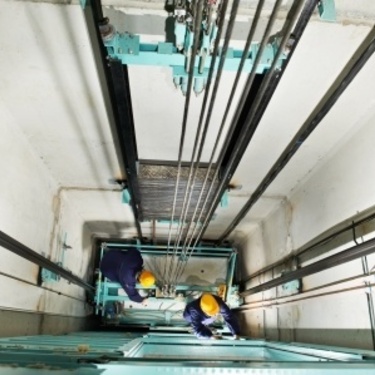 A New York appellate court issued a trio of opinions upholding a trial justice’s decision to allow a worker to proceed with his claims for negligence and violations of the Labor Law.
Case: Caracciolo v. SHS Ralph LLC, Nos. 2019-08578, 2019-08580, and 2021-02214, 04/17/2024, published.
Facts: Richard Caracciolo allegedly was injured during a construction project that was taking place on premises owned by SHS Ralph LLC. Wilcox Development Corp. was the general contractor.
Caracciolo worked for Thyssenkrupp Elevator Corp., a subcontractor. He allegedly fell one story to the ground after ...
A New York appellate court issued a trio of opinions upholding a trial justice’s decision to allow a worker to proceed with his claims for negligence and violations of the Labor Law.
Case: Caracciolo v. SHS Ralph LLC, Nos. 2019-08578, 2019-08580, and 2021-02214, 04/17/2024, published.
Facts: Richard Caracciolo allegedly was injured during a construction project that was taking place on premises owned by SHS Ralph LLC. Wilcox Development Corp. was the general contractor.
Caracciolo worked for Thyssenkrupp Elevator Corp., a subcontractor. He allegedly fell one story to the ground after ...
 A New York appellate court ruled that a worker was not entitled to summary judgment on any of his Labor Law claims and that the defendant was entitled to have one claim partially dismissed.
Case: Giraldo v. Highmark Independent LLC, No. 2020-02571, 04/17/2024, published.
Facts: Highmark Independent LLC hired Canyon Building & Design LLC as the general contractor for a school construction project. JC Duggan and Sublink Ltd. were both subcontractors for the project.
Mauro Giraldo worked for JC Duggan. He allegedly was injured when he was struck by a prefabricated modular unit as a cr...
A New York appellate court ruled that a worker was not entitled to summary judgment on any of his Labor Law claims and that the defendant was entitled to have one claim partially dismissed.
Case: Giraldo v. Highmark Independent LLC, No. 2020-02571, 04/17/2024, published.
Facts: Highmark Independent LLC hired Canyon Building & Design LLC as the general contractor for a school construction project. JC Duggan and Sublink Ltd. were both subcontractors for the project.
Mauro Giraldo worked for JC Duggan. He allegedly was injured when he was struck by a prefabricated modular unit as a cr...


 A recent question on workers' compensation adjuster licenses was emailed to me two weeks ago:
I have just passed my licensing exam in Georgia to handle workers' compensation claims. Do I have to take a test for each state to adjust claims outside of my home state?
Most states allow out-of-state adjusters to adjust claims, but it is not automatic. Do not adjust claims in states where you do not have the authority to do so, or you may end up in quite a bind. You do not want your name listed in an insurance department publication where you ha...
A recent question on workers' compensation adjuster licenses was emailed to me two weeks ago:
I have just passed my licensing exam in Georgia to handle workers' compensation claims. Do I have to take a test for each state to adjust claims outside of my home state?
Most states allow out-of-state adjusters to adjust claims, but it is not automatic. Do not adjust claims in states where you do not have the authority to do so, or you may end up in quite a bind. You do not want your name listed in an insurance department publication where you ha...
 Mississippi Gov. Tate Reeves on Saturday signed into law a bill that authorizes local governments to provide 60 days of pay to the beneficiaries of certain first responders who die in the line of duty.
The governor signed House Bill 1697, which enables counties, municipalities, public universities and others to pay the full compensation of any law enforcement officer, firefighter or emergency medical technician who is killed on the job.
The benefits would not be paid out in the event the on-duty death was a suicide.
Death compensation benefits would be paid to designated beneficiaries. If t...
Mississippi Gov. Tate Reeves on Saturday signed into law a bill that authorizes local governments to provide 60 days of pay to the beneficiaries of certain first responders who die in the line of duty.
The governor signed House Bill 1697, which enables counties, municipalities, public universities and others to pay the full compensation of any law enforcement officer, firefighter or emergency medical technician who is killed on the job.
The benefits would not be paid out in the event the on-duty death was a suicide.
Death compensation benefits would be paid to designated beneficiaries. If t...
 The South Carolina Senate passed a resolution authorizing electronic payments for certain workers’ compensation benefits.
The Senate on Friday unanimously passed S 1266, a joint resolution by the Senate Judiciary Committee.
If passed by the state House of Representatives, the resolution would satisfy the requirement that the legislature approve amendments to Regulation 67-1602 “to modernize the payment of compensation to claimants by codifying circumstances where use of electronic payment is mandatory and where use of a check is permissive.”
The Workers’ Compensation...
The South Carolina Senate passed a resolution authorizing electronic payments for certain workers’ compensation benefits.
The Senate on Friday unanimously passed S 1266, a joint resolution by the Senate Judiciary Committee.
If passed by the state House of Representatives, the resolution would satisfy the requirement that the legislature approve amendments to Regulation 67-1602 “to modernize the payment of compensation to claimants by codifying circumstances where use of electronic payment is mandatory and where use of a check is permissive.”
The Workers’ Compensation...

 The Colorado Senate Appropriations Committee passed a bill that would strip the right of the state to self-insure its workers’ compensation risks.
Senate Bill 149, by Sen. Nick Hinrichsen, D-Pueblo, would require the state Department of Personnel and Administration to annually solicit three quotes for work comp coverage from Pinnacol Assurance, the state-chartered comp carrier, and three other insurers. The department would be required to present the quotes to the General Assembly for approval, under terms of the bill.
SB 149 would additionally prohibit the state from suggesting or req...
The Colorado Senate Appropriations Committee passed a bill that would strip the right of the state to self-insure its workers’ compensation risks.
Senate Bill 149, by Sen. Nick Hinrichsen, D-Pueblo, would require the state Department of Personnel and Administration to annually solicit three quotes for work comp coverage from Pinnacol Assurance, the state-chartered comp carrier, and three other insurers. The department would be required to present the quotes to the General Assembly for approval, under terms of the bill.
SB 149 would additionally prohibit the state from suggesting or req...
 The Oregon Court of Appeals ruled that when an insurer submits an independent medical examination report as evidence to support its denial of a worker’s claim, the denial is “based” on an IME, and the worker is eligible for a worker-requested medical examination.
Thomas Cardoza allegedly injured his back while working for Werner Gourmet Meat Snacks Inc. Werner had workers’ compensation insurance coverage with SAIF Corp., which contested Cardoza’s claim.
SAIF requested that Cardoza submit to an IME by a physician of its choosing. That doctor’s report s...
The Oregon Court of Appeals ruled that when an insurer submits an independent medical examination report as evidence to support its denial of a worker’s claim, the denial is “based” on an IME, and the worker is eligible for a worker-requested medical examination.
Thomas Cardoza allegedly injured his back while working for Werner Gourmet Meat Snacks Inc. Werner had workers’ compensation insurance coverage with SAIF Corp., which contested Cardoza’s claim.
SAIF requested that Cardoza submit to an IME by a physician of its choosing. That doctor’s report s...
 A divided Arkansas Court of Appeals upheld a finding that a worker was not entitled to additional temporary total disability benefits after his treating surgeon placed him at maximum medical improvement.
Case: Reed v. M.A. Mortenson Cos. No. CV-22-817, 04/17/2024, published.
Facts: Leonard Reed worked for M.A. Mortenson Cos. as a truck driver. While he was at work in October 2017, a 4-pound piece of metal struck his right leg. Dr. David Wassell performed surgery to repair a fracture to Reed’s tibia, and he began collecting temporary total disability benefits.
In March 2018, Wassell op...
A divided Arkansas Court of Appeals upheld a finding that a worker was not entitled to additional temporary total disability benefits after his treating surgeon placed him at maximum medical improvement.
Case: Reed v. M.A. Mortenson Cos. No. CV-22-817, 04/17/2024, published.
Facts: Leonard Reed worked for M.A. Mortenson Cos. as a truck driver. While he was at work in October 2017, a 4-pound piece of metal struck his right leg. Dr. David Wassell performed surgery to repair a fracture to Reed’s tibia, and he began collecting temporary total disability benefits.
In March 2018, Wassell op...
 A New York appellate court ruled that the forum selection clause in an illegal insurance policy is not enforceable as a matter of public policy.
Case: Air-Sea Packing Group Inc. v. Applied Underwriters Inc., No. 711035/19, 04/17/2024, published.
Facts: Applied Underwriters Inc. and Applied Underwriters Captive Risk Assurance Co. are affiliates of Berkshire Hathaway Inc. and headquartered in Nebraska. They sold a workers' compensation insurance program in New York known as EquityComp.
Air-Sea Packing Group Inc. purchased the EquityComp program and participated in it from April 2014 ...
A New York appellate court ruled that the forum selection clause in an illegal insurance policy is not enforceable as a matter of public policy.
Case: Air-Sea Packing Group Inc. v. Applied Underwriters Inc., No. 711035/19, 04/17/2024, published.
Facts: Applied Underwriters Inc. and Applied Underwriters Captive Risk Assurance Co. are affiliates of Berkshire Hathaway Inc. and headquartered in Nebraska. They sold a workers' compensation insurance program in New York known as EquityComp.
Air-Sea Packing Group Inc. purchased the EquityComp program and participated in it from April 2014 ...
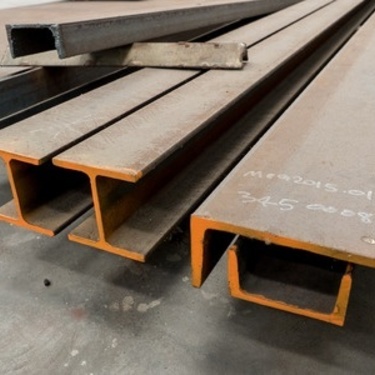 A New York appellate court ruled that an insurance carrier was entitled to summary judgment dismissing a claim for coverage for a construction worker’s Labor Law action.
Case: Rock Group NY Corp. v. Certain Underwriters at Lloyd's, London, No. 653310/21, 04/16/2024, published.
Facts: Rock Group NY Corp. purchased a commercial general liability policy from Certain Underwriters at Lloyd's, London.
Rock sought coverage under the policy after it became a defendant in a Labor Law action by a worker who was injured while unloading an iron beam from a truck.
As the worker was handin...
A New York appellate court ruled that an insurance carrier was entitled to summary judgment dismissing a claim for coverage for a construction worker’s Labor Law action.
Case: Rock Group NY Corp. v. Certain Underwriters at Lloyd's, London, No. 653310/21, 04/16/2024, published.
Facts: Rock Group NY Corp. purchased a commercial general liability policy from Certain Underwriters at Lloyd's, London.
Rock sought coverage under the policy after it became a defendant in a Labor Law action by a worker who was injured while unloading an iron beam from a truck.
As the worker was handin...
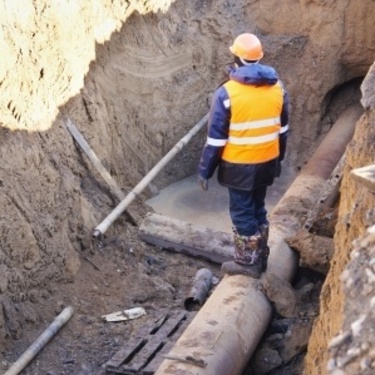 The California Division of Occupational Safety and Health fined a construction company $371,100 for a September 2023 fatal trench collapse in San Francisco.
A 24-year-old employee of D’Arcy & Harty Construction Inc. was replacing sewer parts inside an 8-foot-deep trench when the excavation collapsed and he was killed.
The agency commonly known as Cal/OSHA said the company failed to provide a protective system for employees working in the trench and failed to provide a means of escape such as a ladder. Cal/OSHA said it warned the company about the hazards about a week befo...
The California Division of Occupational Safety and Health fined a construction company $371,100 for a September 2023 fatal trench collapse in San Francisco.
A 24-year-old employee of D’Arcy & Harty Construction Inc. was replacing sewer parts inside an 8-foot-deep trench when the excavation collapsed and he was killed.
The agency commonly known as Cal/OSHA said the company failed to provide a protective system for employees working in the trench and failed to provide a means of escape such as a ladder. Cal/OSHA said it warned the company about the hazards about a week befo...

 Three former managers in a workers’ compensation department in Zurich North America’s Rancho Cordova, California, branch have been awarded $80.3 million in compensatory and punitive damages by a jury that found the carrier had wrongfully terminated them for taking unofficial paid time off, according to the firm that represented them.
According to a statement issued Thursday by The Bohm Law Group Inc., which represented Melinda Brantley, Nicholas Lardie and Daniel Koos, the three were fired over accusations that they stole from their employer for taking “off the rec...
Three former managers in a workers’ compensation department in Zurich North America’s Rancho Cordova, California, branch have been awarded $80.3 million in compensatory and punitive damages by a jury that found the carrier had wrongfully terminated them for taking unofficial paid time off, according to the firm that represented them.
According to a statement issued Thursday by The Bohm Law Group Inc., which represented Melinda Brantley, Nicholas Lardie and Daniel Koos, the three were fired over accusations that they stole from their employer for taking “off the rec...
 The California Assembly Appropriations Committee scheduled a Wednesday hearing for a bill that would allow electronic signatures in proceedings before the Workers’ Compensation Appeals Board.
AB 2337, by Assemblymember Diane Dixon, R-Newport Beach, would define “signature” to include electronic records and electronic signatures for WCAB hearings. The bill would also allow signature requirements in the Labor Code to be satisfied by an electronic signature.
“Electronic signatures were used effectively in workers’ compensation proceedings for three years durin...
The California Assembly Appropriations Committee scheduled a Wednesday hearing for a bill that would allow electronic signatures in proceedings before the Workers’ Compensation Appeals Board.
AB 2337, by Assemblymember Diane Dixon, R-Newport Beach, would define “signature” to include electronic records and electronic signatures for WCAB hearings. The bill would also allow signature requirements in the Labor Code to be satisfied by an electronic signature.
“Electronic signatures were used effectively in workers’ compensation proceedings for three years durin...